
On a working platform or a busy survey vessel, the constraint on an inspection is rarely the ROV. It is finding somewhere to put it. Deck space is committed long before an inspection team arrives, weather rarely cooperates, and hazardous area classification rules out much of what is left.
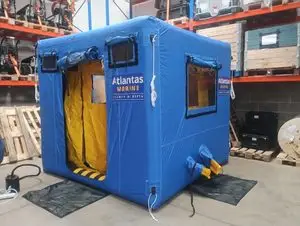
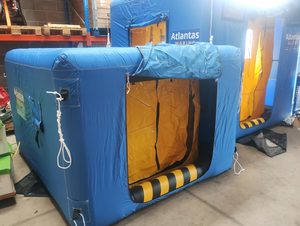
Our new inflatable habitats are built to remove that constraint. Each unit gives an Atlantas Marine ROV system a sheltered, controlled workspace for ROV operations in confined areas onboard oil and gas installations and construction and survey vessels, so the team can set up, operate and maintain the system properly rather than working around whatever space happens to be free.
Designed around our own systems
The habitats have been designed specifically to house Atlantas Marine ROV systems, not adapted from a general purpose shelter. That matters in practice: the layout, the access and the internal working space all come from how our own operators actually run these systems offshore, in the conditions they run them in.
Each unit is portable and can be mobilised in under five minutes, so the time on deck goes into the survey rather than into the setup.
Built for the offshore environment
The fabric has been selected for the conditions the habitats will work in:
- Tear resistant, so the unit stands up to repeated mobilisation and demobilisation on a working deck.
- Anti-static, reducing the risk of static discharge around the equipment and the surrounding installation.
- Water repellent, keeping spray and rain off the ROV system and the control equipment inside.
- Flame retardant, meeting the fire safety expectations of an offshore working environment.
Zone 1 and Zone 2 capability
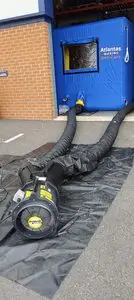
Hazardous area classification is often what decides where an ROV system can and cannot be set up. Each habitat is supplied with ATEX rated fans and ducting that hold the unit at positive pressure, keeping the internal atmosphere clean and allowing the habitat to be used in Zone 1 and Zone 2 areas where the client requires it.
That opens up parts of an installation that would otherwise be closed to a temporary workspace, and gives the operator a defined, controlled environment rather than an improvised one.
Where the habitats are now
This is a new product for us. Testing is complete and the first units are being shipped to Brazil to operate onboard oil platforms. We have not yet run them on a live campaign, and we would rather say that plainly than claim field experience we do not have. Once they are in service, we will share how they perform and what we learn from the first deployments.
What we can say now is that they were designed by the same team that operates the equipment they house, which is the standard we apply to everything we build and supply.
Get in touch
If you are planning inspection work in confined or hazardous areas and want to talk through how a habitat could fit your scope, contact the team at Atlantas Marine.